
Dog Translator - Human to Pet
DEHA STUDIOLifestyle
0.00.00 Reviews
- Version
- 1.0.19
- Installs
- 10.00K
- Age Rating
- Everyone
Screenshots
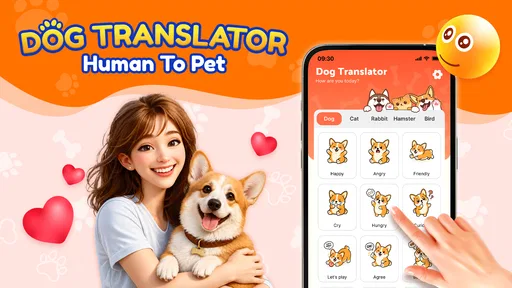
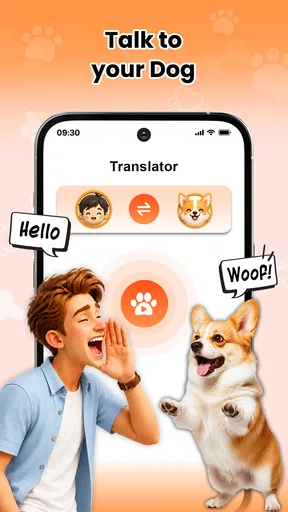
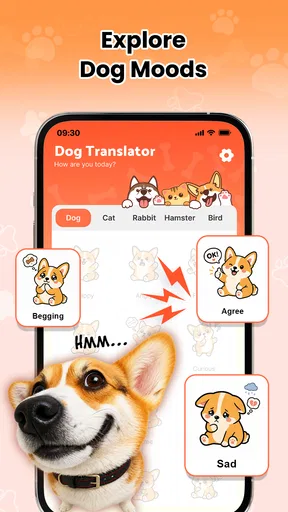

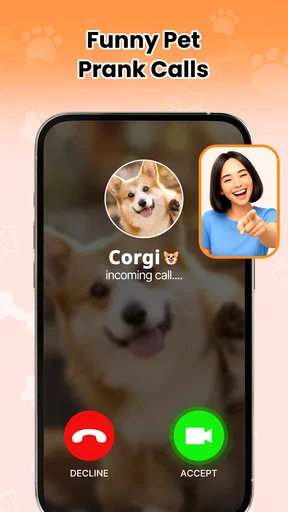
Our Review of Dog Translator - Human to Pet
 Analysis by Appyee
I tried Dog Translator - Human to Pet as a lighthearted lifestyle app, and its appeal is easy to understand: it turns ordinary speech into playful dog-like sounds for a quick laugh. I would not treat it as a genuine animal-translation tool, but I can see it working well when a household wants a simple joke that everyone can understand immediately. The experience is less about learning what a dog truly means and more about creating a funny moment around a familiar voice.
That distinction matters from the start. The app is built for entertainment, not for training, veterinary advice, animal behavior analysis, or reliable communication with a pet. Used with that expectation, it has a clear purpose. Used as a serious interpreter, it becomes disappointing very quickly. My overall impression is that it is best approached as a small prank and conversation starter rather than a permanent pet-care utility.
How it works in a shared household
The most natural way to use it is on a shared phone or tablet during an ordinary family moment. Someone says a short phrase, plays the transformed dog sound, and watches everyone react. A child might announce that the dog is asking for dinner, while an adult adds a deliberately dramatic reply. The humor comes from the contrast between a normal human sentence and the exaggerated pet-style result.
This kind of use also explains why the app can be more enjoyable with other people than alone. A private novelty may last only a few minutes, but a shared joke can become part of a household routine. You might use it when a guest arrives, when a pet is sitting nearby, or when the family is looking for a quick distraction without opening a full game or social network.
I found that short phrases work better than long speeches. They are easier for everyone to hear, easier to repeat, and less likely to make the joke feel slow. “Are you hungry?” or “Who stole the toy?” creates a clear setup. A long explanation about the day usually adds effort without making the sound more amusing. This is one of the practical differences between a novelty translator and a conventional voice recorder: the fun depends on timing, not on preserving a meaningful conversation.
For a shared device, I would keep the app available in a place where people can open it without handing over a personal phone. That makes the activity feel communal and avoids turning one person’s device into the permanent center of the joke. It also helps younger users understand that the app is something to use together, rather than a tool that should be trusted to explain every pet behavior.
What the app is really good at
Its strongest use is creating a fast reaction. There is no need to learn a complicated system or build a character before the central idea becomes clear. The basic loop is familiar: speak, transform the voice, and share the result. That simplicity makes it suitable for a casual living-room moment, a small joke between friends, or an introduction to a new dog that is still getting comfortable with the household.
It can also give children a playful way to participate in conversations about pets. Instead of merely watching adults talk about the animal, they can invent a sentence and hear a humorous version of it. I would still explain that the output is pretend. That small explanation prevents the app from becoming confusing, especially for children who are still learning the difference between a game effect and a real animal signal.
Another useful scenario is breaking an awkward silence. If a family is waiting for food, preparing for a walk, or taking a short break from chores, a silly voice effect can provide a low-effort activity. It does not demand the attention commitment of a video or a multiplayer game. That makes it a better fit for brief gaps in the day than for a long entertainment session.
Setup expectations and practical boundaries
The app is free, which makes trying it less of a commitment. It is listed for Everyone, and it runs on devices using Android 7.0 or later. Those details make it approachable for households with an older compatible Android phone, although the actual comfort of using it will still depend on the device’s microphone, speaker, and general condition.
Before handing it to a child, I would test the basic flow myself. The reason is not that the concept is difficult, but that shared-device use works best when the adult already knows where to tap and how loud the result may be. A quick check also lets you decide whether the sound is suitable for the room. A dog may react to an unexpected noise, and a sleeping pet or nervous animal should not be treated as part of the punchline.
One of my more useful tips is to choose the setting before recording rather than trying to improvise while everyone is waiting. Decide whether the goal is a private joke, a short performance for the room, or a playful clip to show someone nearby. The app is more enjoyable when the people around it know what they are doing. Otherwise, a simple gag can turn into repeated tapping and requests to start again.
I would also avoid using it during moments when a real instruction matters. If a dog is being called away from a road, warned about food, or guided during training, a novelty voice can blur the message. A conventional command from a familiar person is the better choice. This is a small but important boundary: the app can imitate a playful pet sound, but it should not replace clear human communication when safety is involved.
Coordinating use between adults and children
There is no reason to treat this as a private translator in a household. In fact, it works better when people coordinate the joke. One person can choose the phrase, another can hold the device, and a third can decide whether the pet is comfortable with the sound. That simple division keeps the activity from becoming repetitive and makes it easier to stop when the animal loses interest.
For younger users, I would establish a straightforward rule: ask before recording another person’s voice, and do not use the result to embarrass someone who does not want to participate. A funny effect can change the mood quickly, particularly when a child plays it back in front of visitors. The app itself is not a substitute for household agreement, so the best experience comes from setting that expectation before the first prank.
Shared use also raises a practical question: whose voice should be recorded? If several people are around, the clearest speaker is usually the best choice. Quiet speech, background noise, and people talking over one another can make the result less satisfying. Taking turns keeps the process cleaner and gives everyone a chance to contribute without turning the phone into a tug-of-war.
For a small gathering, I would use a three-step routine. First, agree on a short phrase. Second, record it once without trying to perform too hard. Third, play the result and move on if the joke lands. Repeating the same sentence many times rarely improves it. The app’s novelty is strongest when it stays spontaneous rather than becoming a technical challenge.
Age, trust, and the limits of the joke
The Everyone rating fits the harmless, playful idea, but an age label should not be mistaken for a complete guide to responsible use. Children may accept the name “translator” literally, especially if they already believe pets understand every human sentence. I would describe it as a sound-effect app that pretends to translate speech. That wording keeps the fun while protecting trust.
This is particularly important if a child is worried about a pet’s behavior. A dog that is hiding, barking continuously, refusing food, or acting unusually needs calm observation and, when appropriate, advice from a qualified professional. Turning those signs into a joke may distract from the real issue. The app belongs in playful situations, not in decisions about an animal’s health or emotional state.
Adults should also be careful about using the effect to make claims about what a pet “said.” Saying that the dog is obviously asking for a treat can be funny once, but presenting the result as evidence may encourage poor habits. The animal’s body language, routine, and actual behavior are much more useful sources of information. I appreciate the app more when it is treated as theatrical decoration around those real observations.
Trust matters between people as well. A voice transformation can be harmless when everyone agrees, but it can feel intrusive when someone’s recording is shared without permission. In a household with multiple users, I would make consent part of the routine, especially if the result is going to be replayed around guests. That is not a limitation unique to this app; it is simply the responsible way to handle any voice-based novelty tool.
How it compares with ordinary alternatives
Compared with a standard voice recorder, this app offers an immediate comic payoff. A recorder preserves what was said, while this experience changes the mood by turning the voice into something pet-themed. If your goal is to remember a message, document a pet’s real bark, or review a training session, the ordinary recorder is the more useful option. If your goal is a quick laugh, the playful transformation has a clearer advantage.
Compared with a serious pet-care app, it is much narrower. A care-focused alternative may help with routines, reminders, feeding information, or behavior notes. This app does not occupy that role. Its value is social and momentary, not organizational. I would keep both types of app separate rather than expecting one to cover the other.
It also differs from a full game. There is no need to progress through levels or master a complicated challenge to enjoy the central idea. That makes it easier to introduce to someone who does not normally play mobile games. The trade-off is staying power: once the household has tried the main joke several times, there may be little reason to keep returning unless a new situation makes the effect funny again.
Finally, compared with simply making a silly voice yourself, the app adds consistency and a shared object to the joke. Everyone hears the same transformed result, which can make the moment feel more like an activity. On the other hand, human improvisation is often more flexible. If your friends are already comfortable inventing voices, they may get more variety from conversation alone.
What I would improve in the everyday workflow
I would use the app in short sessions rather than leaving it running during an entire pet interaction. Start with one phrase connected to what is happening, such as a playful invitation to walk or a pretend complaint about an empty bowl. Then stop and let the household react. This keeps the pet from becoming overwhelmed and prevents the novelty from flattening into background noise.
A second tip is to keep the joke about the speaker, not the animal. Instead of claiming that the dog has delivered a precise message, frame it as “what the dog might say in a silly movie.” That shift gives children room to imagine without teaching them that a generated sound reveals an animal’s true thoughts.
A third tip is to use it as a conversation starter after the sound, not as the whole activity. Ask children what they think the pet actually wants, then compare that guess with visible behavior such as waiting by the door or bringing a toy. In that format, the app becomes a bridge to observation rather than a replacement for it. This is where I think the experience has more value than its quick prank premise suggests.
There is also a social trade-off worth remembering. A person who enjoys silly effects may want to repeat the joke, while another household member may find the transformed voice irritating. Agreeing on a stopping point is surprisingly useful. A novelty app succeeds when it creates shared amusement; it fails when one person controls the device and everyone else is expected to tolerate it.
Who should try it and who should skip it
I would recommend it to someone who wants a free, uncomplicated pet-themed gag for occasional household use. It is especially suitable for people who enjoy short interactive jokes, have a dog nearby, or want a playful activity that does not require a long setup. The Everyone rating and support for Android 7.0 or later also make it a reasonable candidate for a compatible family device.
I would be more cautious about recommending it to someone looking for genuine animal communication. The name and concept can encourage unrealistic expectations, and no voice effect can tell you reliably whether a dog is anxious, ill, hungry, or simply reacting to something outside. For those needs, careful observation and appropriate pet-care resources are far better choices.
It is also not the best fit for someone who dislikes novelty apps with a short entertainment cycle. If you expect ongoing progression, detailed customization, or a practical daily function, the experience may feel thin after the first few uses. Its strength is immediate accessibility, and that same simplicity limits its depth.
DEHA STUDIO presents it as a lifestyle app rather than a serious utility, and that placement feels appropriate. The current version is 1.0.19, while the app has passed the early curiosity stage with over ten thousand installs. I would still judge it by the quality of a shared moment, not by how long it remains installed. A tool like this earns its place when someone opens it at exactly the right time and everyone laughs.
My household verdict
After using it, I see Dog Translator - Human to Pet as a small social toy with a clear boundary: it can make a human voice sound amusingly dog-like, but it cannot translate a pet’s real thoughts. That is not a weakness if you approach it honestly. The best results come from short phrases, cooperative participants, a comfortable animal, and an adult who keeps the fictional part clear for younger users.
The free price lowers the barrier to trying it, and its lifestyle focus makes sense for casual household entertainment. I like that it can fit into a spare minute without demanding a full game session. I also like the possibility of using it to encourage children to notice real pet behavior after the joke is over. Those are modest strengths, but they are genuine.
My reservations are equally straightforward. The novelty may fade, repeated sounds can annoy people or pets, and the app should never be used for training, safety decisions, health concerns, or claims about what an animal truly communicates. A normal recorder is better for preserving audio, while a pet-care tool is better for practical routines. This app wins only when the goal is playful transformation.
For a shared phone on a relaxed afternoon, I would keep it in the “try it once and see who enjoys it” category. If your household understands the joke, respects voice consent, and watches the dog’s comfort, it can create a memorable little scene. If you need reliable information, lasting depth, or serious pet guidance, I would choose a different kind of app instead.
Verdict
Strengths of Dog Translator - Human to Pet
- Simple interface makes it easy to start recording sounds quickly.
- Includes playful sound effects for entertaining pet interactions.
- Works well as a casual activity for children and families.
- Short audio clips keep sessions quick and engaging.
- Can encourage owners to observe their pet’s reactions more closely.
Limitations of Dog Translator - Human to Pet
- Results are for entertainment and should not be treated as real translations.
- Some sounds may startle sensitive or anxious pets.
- Repeated audio effects can become annoying during longer sessions.
- Ad-supported features may interrupt the experience.
- It cannot replace professional advice about unusual pet behavior.
Similar Picks in This Category
View All
SmartThings
Samsung Electronics Co., Ltd.4.6

Google Home
Google LLC4.0

Pinterest4.2

Astrotalk - Talk to Astrologer
Astrology & Horoscope4.7

My Verizon
Verizon Consumer Group4.5

Samsung Wallet (Samsung Pay)
Samsung Electronics Co., Ltd.4.1
Frequently Asked Questions
What is Dog Translator - Human to Pet, and how does it work?
Dog Translator - Human to Pet is an entertainment app designed to simulate communication between people and dogs. You can record or select phrases, and the app presents playful translated sounds or responses inspired by common dog behaviors. It should not be considered a scientifically accurate translator. Its main purpose is to create funny moments, interact with your pet, and provide a lighthearted way to experiment with sounds and reactions.
Can Dog Translator - Human to Pet really understand what my dog is saying?
No. The app cannot genuinely interpret a dog’s thoughts, emotions, or vocalizations. Its translations are generated for entertainment and should not be used to diagnose a pet’s health, identify pain, or determine serious behavioral problems. A dog’s barking, whining, body language, and behavior can have many meanings, so concerns about anxiety, illness, aggression, or unusual activity should always be discussed with a qualified veterinarian or professional animal behaviorist.
Does the app require an internet connection, a microphone, or special permissions?
The exact requirements may vary depending on the version and your device. Features involving voice recording, sound playback, or sharing may request microphone and media permissions. Some functions can work without a constant connection, while advertisements, updates, or online features may require internet access. Before accepting permissions, review what the app requests in your device settings and allow only access that seems necessary for the features you intend to use.
Is Dog Translator - Human to Pet safe and suitable for all dogs?
The app is generally intended for casual, supervised entertainment, but every dog may react differently to artificial voices, sound effects, or repeated playback. Begin with a low volume and observe your pet’s body language. Stop using the app if your dog appears frightened, stressed, agitated, or tries to escape. Avoid playing loud sounds near sensitive ears, puppies, elderly dogs, or pets with hearing-related conditions, and never use it to deliberately provoke an animal.
Is Dog Translator - Human to Pet free to download, and are there ads or in-app purchases?
The app may be available as a free download, but free versions commonly include advertising, optional purchases, or premium features depending on the platform and current release. Check the Google Play Store or Apple App Store listing before installing to confirm pricing, subscriptions, and supported devices. If children use the app, it is wise to enable parental controls and review purchase settings so accidental payments are avoided.
